
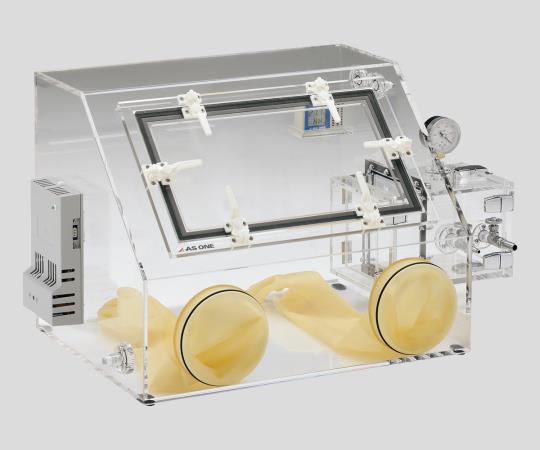
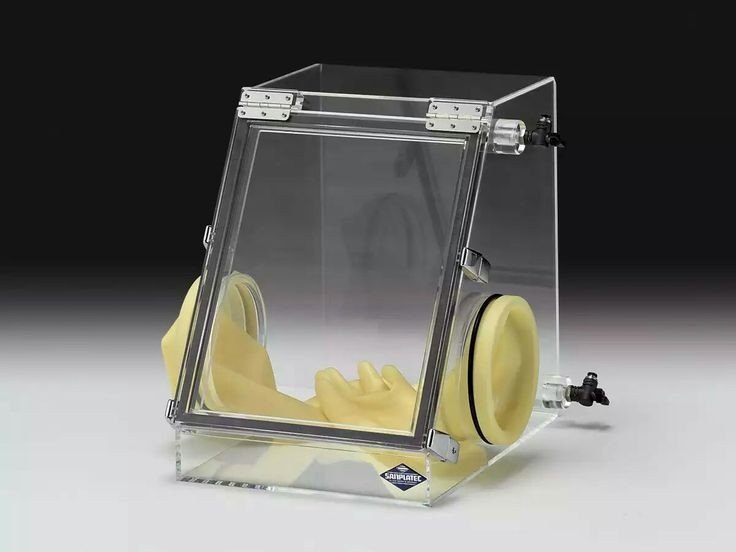
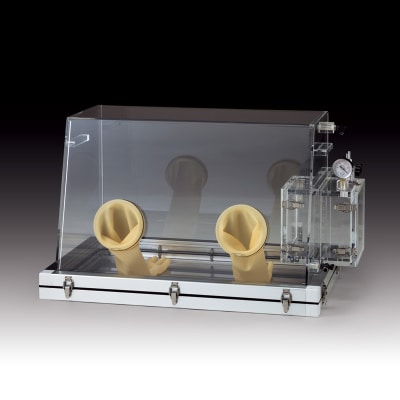
Dry box gloves (also widely known as glovebox gloves) are highly specialized, heavy-duty barrier sleeves designed to maintain a completely sealed atmosphere inside isolation glove boxes, isolators, and containment chambers. They allow operators to safely manipulate hazardous materials, sensitive electronics, or biological agents from outside the chamber without disrupting the inner vacuum, inert gas balance, or sterile environment.
Key Features
- Total Atmosphere Isolation: Provides a gastight, positive or negative pressure seal between the operator and the internal chamber environment.
- One-Piece Seamless Design: Liquid-molded as a single, continuous sleeve and glove unit to completely eliminate weak seams or leakage points.
- Extended Sleeve Length: Extra-long construction designed to fit standard round or oval glovebox ports, allowing full-arm reach inside the chamber.
- Ambidextrous or Hand-Specific Configurations: Available in universal ambidextrous shapes for high-turnover workstations, or left/right hand-specific pairs for maximum dexterity.
- Port Beaded Cuff: Features a thick, reinforced rolled bead at the shoulder end to securely lock onto standard chamber port rims via O-rings or clamps.
- Diverse Material Options: Formulated in specialized polymers (like Butyl, Hypalon/CSM, Neoprene, or Polyurethane) to withstand distinct chemical, UV, or radioactive threats.
Product Specifications
- Material Composition: Butyl (for gas/vapor impermeability), CSM/Hypalon (for ozone and ionizing radiation resistance), Neoprene (for general chemical/mechanical defense), or Polyurethane (for exceptional abrasion resistance).
- Port Diameters: Sized to fit standard industrial chamber ports, most commonly 6-inch (150 mm), 8-inch (200 mm), or 10-inch (250 mm) openings.
- Length Range: Extremely long, typically spanning from 24 inches to 32 inches (600 mm to 800 mm) to guarantee deep chamber reach.
- Thickness Profile: Heavy-duty gauge, generally ranging from 15 mil (for high dexterity) to 30 mil or thicker (for heavy mechanical durability).
- Sterility & Cleanness: Available in ultra-clean, washed configurations for semiconductor cleanrooms or gamma-sterilized options for pharmaceutical barrier isolators.
- Compliance Standards: Extensively tested to meet strict industrial metrics including EN ISO 374 (Chemical Protection), EN 388 (Mechanical Risks), and ISO 14644 cleanroom standards.
Product Applications
- Nuclear & Radioactive Handling: Used in nuclear research chambers to shield operators from low-level radiation, radioactive dust, and toxic isotopes.
- Pharmaceutical & Sterile Isolators: Deployed in sterile compounding, toxic drug formulation, and vaccine manufacturing to prevent batch contamination.
- Semiconductor & Lithium-Battery R&D: Protects moisture-sensitive silicon wafers and highly reactive lithium components from ambient oxygen and humidity inside inert gas chambers.
- Biomedical & High-Containment Labs: Installed in Biosafety Level 3 and 4 (BSL-3/BSL-4) laboratories to securely isolate lethal viruses, bacteria, and toxins.
- Aerospace & Specialty Welding: Used in specialized vacuum chambers for argon-gas tungsten arc welding (TIG) of sensitive aerospace metals like titanium.
Storage & Handling Instructions
- Environmental Control: Store flat in a cool, dry area away from artificial ozone generators, electric motors, and specialized high-voltage machinery.
- UV & Light Suppression: Keep inventory strictly inside original opaque packaging, shielded from direct sunlight or heavy fluorescent light to prevent accelerated polymer hardening or cracking.
- Pre-Use Integrity Testing: Always perform a visual check and an inflation pressure-leak test before every shift. Look closely for pinholes, thinning, or chemical swelling at the fingertips.
- Port Installation Protocol: Secure the glove bead onto the port using designated heavy-duty O-rings or mechanical clamps. Double-check the seal with a gas detector or pressure differential monitor prior to opening hazardous materials.
Conclusion
Dry box gloves serve as an irreplaceable physical bridge between a human operator and an extreme environment. Whether they are protecting an engineered atmosphere from human humidity or shielding an operator from dangerous radioactive materials, choosing the correct port-sized, chemically compatible dry box glove is critical to ensuring operational safety, process purity, and flawless environmental isolation.


Reviews
There are no reviews yet.