BIO HAZARD WASTBIN

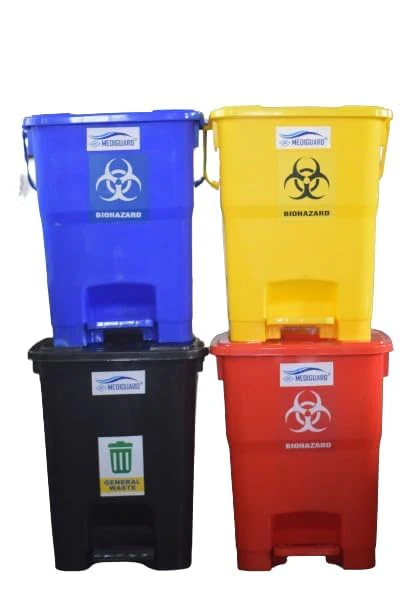
A biohazard dustbin (formally categorized as a Biomedical Waste (BMW) Bin) is a heavily regulated, specialized containment unit engineered specifically for hospitals, diagnostics labs, pharmacies, and pharmaceutical plants. Unlike general janitorial bins, it incorporates strict hands-free entry mechanisms, precise color-coding parameters, and universal hazard warning symbols to contain and safely segregate infectious materials.

Product Short Description
  • Functionality: Infection-control containment bin engineered with a hands-free mechanical foot pedal to enable touchless disposal of bio-contaminated refuse. 
  • Core Advantage: Mandated by healthcare boards to eliminate cross-contamination risks and safeguard disposal personnel from bloodborne pathogens or chemical exposure. 
  • Safety Markings: Molded with a high-contrast Universal Biohazard Symbol and explicit category labeling directly on the exterior walls to prevent user error. 
  • Containment Profile: Features weighted, tight-fitting sealing lids that compress down onto the rim to isolate pungent odors, airborne microbes, and internal moisture.
Material Specification
  • Standard Polymer Build: Injection-molded from premium Polypropylene Co-Polymer (PP-CP) or High-Density Polyethylene (HDPE). Manufacturers like Gromed utilize completely non-chlorinated, virgin polymers to satisfy strict pollution control and cleanroom emission standards during incineration. 
  • Cleanroom Frame Upgrade: Available with a heavy-duty Grade 304 Stainless Steel (SS304) outer chassis framework to resist repeated high-strength sanitization wipe-downs from chlorine, bleach, or hydrogen peroxide. 
  • Thickness & Durability: Features thickened wall profiles (often exceeding 75 microns on flexible components) to remain entirely leak-proof and puncture-resistant under physical stress. 
  • Thermal Performance: Inner liners or autoclavable structures are designed to comfortably withstand disinfection temperatures up to 121°C to 135°C without losing shape or warping.
Color Availability & Strict Segregation Rules
Biohazard bins are uniformly manufactured in vivid colors aligned with WHO, OSHA, and global biomedical waste management protocols: 
  • Yellow Bin: Deployed exclusively for Infectious/Anatomical Waste (human/animal tissues, blood-soaked dressings, body fluid swabs, and clinical culture plates).
  • Red Bin: Deployed exclusively for Contaminated Recyclable Plastics (empty IV tubes, catheters, urine bags, plastic syringes without needles, and disposable gloves).
  • Blue Bin: Deployed exclusively for Glass Waste & Vials (broken laboratory glassware, medicine ampoules, and clean diagnostic slides).
  • White or Translucent Bin: Deployed for Sharps Waste (scalpels, surgical blades, and used hypodermic needles).
  • Black Bin: Deployed for General Non-Infectious Medical Refuse (outer cardboard packaging wrappers, non-contaminated papers, and general facility office waste).
Sizes Available
The bins scale symmetrically across three operational facility classifications:
  • Small Countertop / Wards (10 to 20 Litres):
    • Dimensions: Roughly 21 cm x 21 cm x 26 cm.
    • Best For: Dental clinic chairs, laboratory work benches, and patient examination rooms. 

  • Medium Room Floor Scale (30 to 60 Litres):
    • Dimensions: Roughly 415 mm x 425 mm x 615 mm.
    • Best For: Main surgical operating theatres (OT), diagnostic testing labs, and emergency triage stations. 

  • Large Mobile Bulk Hubs (100 to 240+ Litres):
    • Dimensions: Heavy-duty upright designs sitting 3 to 4 feet tall.
    • Best For: Centralized hospital waste accumulation docks, loading bays, and facility incinerator rooms.
Category:

A Biohazard Wastbin (also known as a biomedical waste bin or infectious clinical waste can) is a specialized, highly regulated container designed strictly for the collection and segregation of hazardous biological and medical waste. It is essential for infection control, compliance with international health regulations, and protecting sanitary workers from dangerous blood-borne pathogens.

Key Features
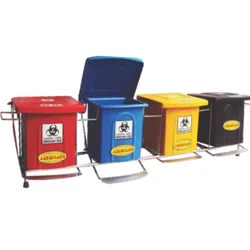
  • Hygienic Hands-Free Operation: Commercial step-on foot pedals open the lid automatically, preventing cross-contamination risks for healthcare staff.
  • Leak-Proof Construction: Seamless molded body matrices prevent biological fluids, chemical drops, or moisture from weeping out onto the floor.
  • Odor-Lock Tight Lid: Tightly sealing lid hinge springs isolate airborne pathogens, foul smells, and spores inside the container.
  • Regulatory Marking Compliance: Pre-printed with prominent, universally recognizable biohazard warning stickers and text to prevent incorrect sorting.
  • Aggressive Compound Resistance: Heavy-duty chemical resistance allows the container walls to endure continuous decontamination soaking with solutions like Virosil Pharma or Savlon.
Product Specifications
  • Structural Material: High-Density Polyethylene (HDPE), Polypropylene (PP), or premium chemical-resistant galvanized steel.
  • Capacities:
    • Chamber/Lab Countertop: 10 Litres to 16 Litres.
    • Clinic & Emergency Wards: 25 Litres, 30 Litres, to 60 Litres.
    • Bulk Medical Collection: 70 Litres, 120 Litres, to 240 Litres wheelie bins.

  • Certifications: Formulated to meet strict clinical safety guidelines like OSHA 29 CFR 1910.1030 (blood-borne pathogen exposures) and FM approvals.
  • Opening System: High-leverage metal rod or heavy-duty plastic link step-on pedal.
Standard Color Coding & Applications
Biohazard segregation follows strict global and national biomedical waste management rules:
  • Yellow Bins: For highly infectious human/animal anatomical waste, soiled cotton bandages, expired medicines, plasma packs, and microbiology culture samples.
  • Red Bins: For contaminated recyclable plastic items, including empty IV bottles, tubing sets, non-sharp syringes, catheters, and protective medical gloves.
  • Blue Bins: Designated for broken or unbroken clinical glassware, medicine vials, ampoules, and metallic body implants.
  • Black/Green Bins: Used in healthcare offices for general municipal, non-hazardous dry waste and organic kitchen refuse.
Storage & Handling Instructions
  • Liners Requirement: Always line the interior with a matching color-coded, certified biohazard drawstring bag (such as a heavy-gauge HDPE bag) to enable secure tie-off and removal.
  • Sharps Restriction: Never drop naked hypodermic needles, razor scalpels, or broken surgical blades directly into plastic biohazard bins. These require puncture-proof, dedicated Sharps Containers.
  • Cleaning Maintenance: Spray down and wipe both the internal cavity and outer foot pedals daily using a medical-grade disinfectant solution.
  • Disposal Boundary: Empty the bins daily or immediately upon reaching 75% capacity. Never allow medical waste to overflow or remain sitting uncovered.
Conclusion
A Biohazard Waste Dustbin is an indispensable line of defense against healthcare-associated infections (HAIs). By incorporating rugged, puncture-resistant polymers with flawless touchless engineering, these bins shield workers, optimize medical compliance, and guarantee safe, organized hospital environments.
Reviews

There are no reviews yet.

Be the first to review “BIO HAZARD WASTBIN”

Your email address will not be published. Required fields are marked *